
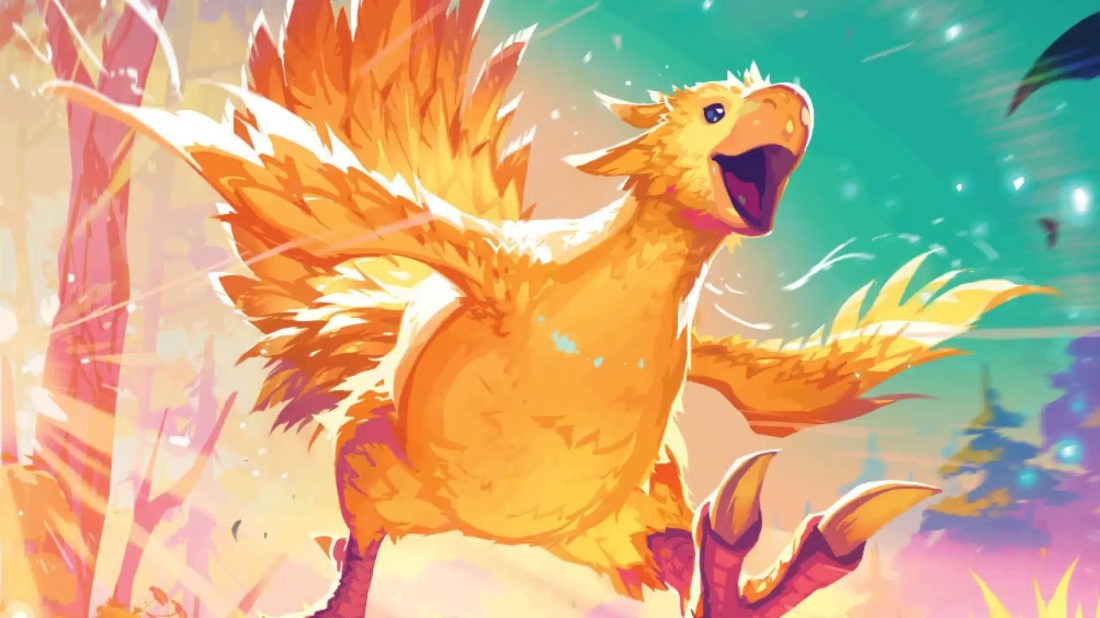
Universes Beyond has been a plague upon Magic: the Gathering. Like everyone else, I’m not a big fan of it, except for the ones I like. In 2025 there was no finer pool of hypocrisy for me to stew in than the release of the Final Fantasy set for Magic. These were two things that came into being at the perfect time in the 90s for me to be of age for my brain to really latch onto. While my time in Magic started in Ice Age, I didn’t really start caring until the Tempest Block. Final Fantasy III (the US version) and Final Fantasy VII scratched the same sort of itch around the same time. For years I and various friends would muse about how great it would be for Final Fantasy to make its way into Magic, to the point of my friend Chase and I printing out cards for various FF characters using screenshots from Kingdom Hearts. I had meticulously recreated the card frames in Photoshop and printed on the best materials we could get hold of in those early 00s. In retrospect they were pretty janky.
Suffice to say, Magic and Final Fantasy were things I liked when I was 14, and therefore they are the coolest things ever and you can’t change my mind. So when it actually happened for real, I knew I was going to hemorrhage quite a bit of money. I put together maybe too many commander decks and a cube containing every single card with every single variant art (ignoring whether what I got hold of was foil or not). I’ve gotten some use out of the cube, happily, but when playing with my kids, one thing became clear: There just weren’t enough chocobos in the draft format. So I set out to fix that.
A famous variant of Magic is Forgetful Fish, or Dandân, which is a pretty great encapsulation of Magic, especially the color blue. I decided this would be a good way to approach a chocobo-based format, proxying up a set of Chocobos, Chocobo related cards, and filling it in with whatever else from the Final Fantasy set seemed to fit. The result is Warkwârk, an 80-card, 2-player shared deck format that features excessive interaction and lots of feathers.
Warkwârk features all of the Red/Green cards that have anything to do with chocobos. The goal here is to make a deck that usually plays fast, but plays fair. Birds can appear quickly and be solved just as fast, until one player inevitably snowballs, but overextending is risky, as a well timed Fire Magic or Nibelheim aflame can turn the whole game around. A small number of trample sources enable you to force some damage through on a gummed up board, and the choice to block or not can turn everything around. Most games are fast, while some are grindy slug fests.
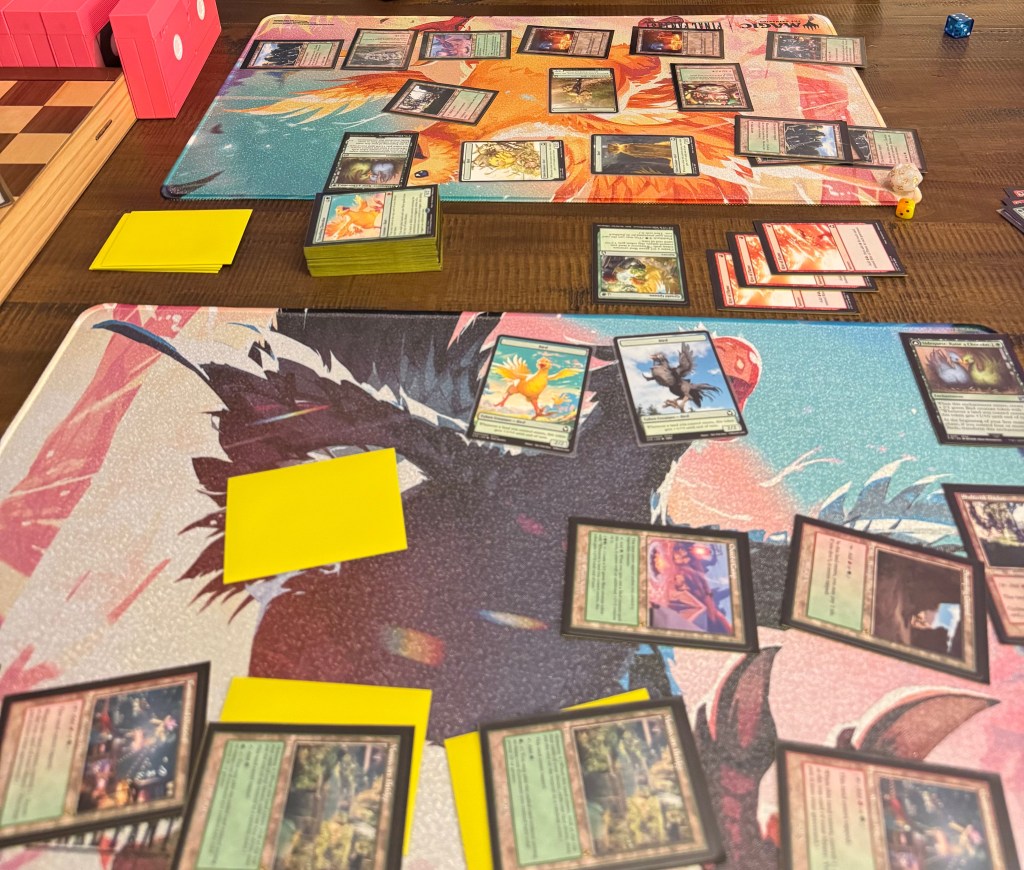
Chocobos generally have 2 toughness, so they generally aren’t particularly tough vs. most of the removal in the deck. Thunder can deal with most things for just 1 mana, with the option of going higher for more mana. Brute Force/Giant Growth played at the right time can make for some surprising defensive and offensive moves, especially when paired with a well times Nibelheim Aflame. The 8 Chocobo Kicks in the deck ensure a steady flow of answers and land drops for your birds’ landfall triggers.
Overall Warkwârk is a very different deck from Dandân, though it tries to keep some of the spirit of a very back-and-forth game that can go very quickly or end up drawing through the whole deck when both players manage to draw enough answers for each other’s birds. I’ve had a lot of fun with this so far. Hopefully some others out there will find it entertaining enough. There’s also a sideboard of potential swaps if something proves to be consistently problematic. You can also lean harder into top deck manipulation or add even more ridiculous answers. Bartz and Boko were initially in the default deck, but in my games I found it to be entirely too devastating whenever it hit the table.
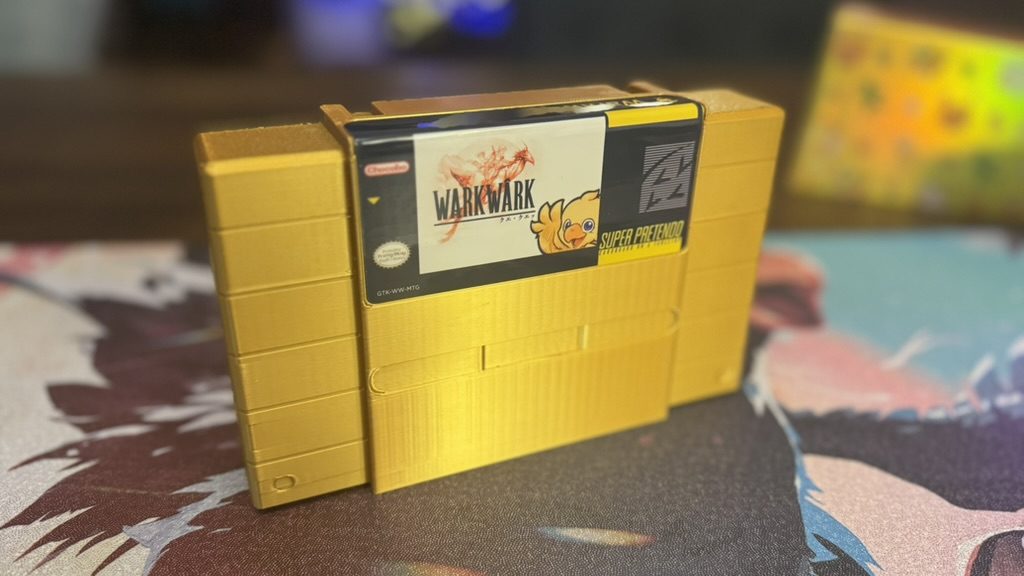
It wouldn’t be enough to just make the deck and throw it in a generic box, of course, so I drafted up a card box to hold all of it, and an insert to hold an extra set in case I wanted to try a 3-4 player variant. For my personal proxy set, I use old frames for all of the lands, and skin a few of them to be on theme. If you want to print your own, you can find my images here.
Here’s the deck list (though you should really just check out the deck here):
| Creatures | |
| 2 Sazh’s Chocobo | A huge threat if allowed to get out of control. |
| 2 Summon: Fat Chocobo | Two birds in one. |
| 10 Traveling Chocobo | Landfall doubler, potential “card draw.” |
| Sorceries | |
| 2 Call the Mountain Chocobo | Grab a land and make a bird. Flashback to do it again. |
| 2 Choco-Comet | Blow something (or someone) up and make a bird. |
| 8 Chocobo Kick | Kick something, possible land drop enabler. |
| 2 Gysahl Greens | Make a bird. Flashback to do it again. |
| 2 Nibelheim Aflame | Probably sweeps up the whole board. Flashback gets you some cards. |
| 4 Rite of Flame | Temporary mana ramp. |
| Instants | |
| 2 Big Score | Card draw an temporary mana ramp. |
| 2 Brute Force | Buff for offense or defense. |
| 2 Fire Magic | Generally a board sweeper. |
| 2 Giant Growth | Buff for offense or defense. |
| 2 Natural Selection | Top deck manipulation. |
| 2 Thunder Magic | Targeted removal. |
| Enchantments | |
| 2 Sidequest: Raise a Chocobo | Make a bird. Make another bird (with a better landfall trigger) if somehow your other birds stick around. |
| Lands | |
| 2 Chocobo Camp | A land that makes birds! Also buffs your |
| 4 Commercial District | Surveil (top deck manipulation) |
| 2 Game Trail | It’s a land! |
| 4 Gruul Turf | Landfall enabler. |
| 2 Mosswort Bridge | Possible discount, if your board gets big enough. |
| 4 Racers’ Ring | Late game card draw. |
| 2 Rootbound Crag | It’s a land! |
| 4 Sheltered Thicket | Cycling (Probably late game card draw.) |
| 2 Skarrg, the Rage Pits | Trample enabler, possible defensive utility. |
| 2 Stomping Ground | It’s a land! |
| 4 Temple of Abandon | Scry land (top deck manipulation) |


 James Gets Through